


Marketing as an Investment in Long-Term Stability, Not Just Short-Term Returns
With rising costs and inflation putting the squeeze on budgets, marketing spending’s under more scrutiny than ever. But here’s the thing: now’s the time to see strong marketing as more than just a sales driver—it’s about building pricing power that keeps profits steady even when times get tough.
Why Measuring Sales Volume Alone Isn’t Enough
Lots of companies judge marketing success solely by sales numbers. That misses half the profit picture: Profit = Sales * Price – Costs. Marketing doesn’t just move units—it shapes what customers are willing to pay.
New research from Google and Kantar shows brands with a solid image can charge higher prices without losing customer trust. In short, marketing directly fuels profitability, not just revenue growth.
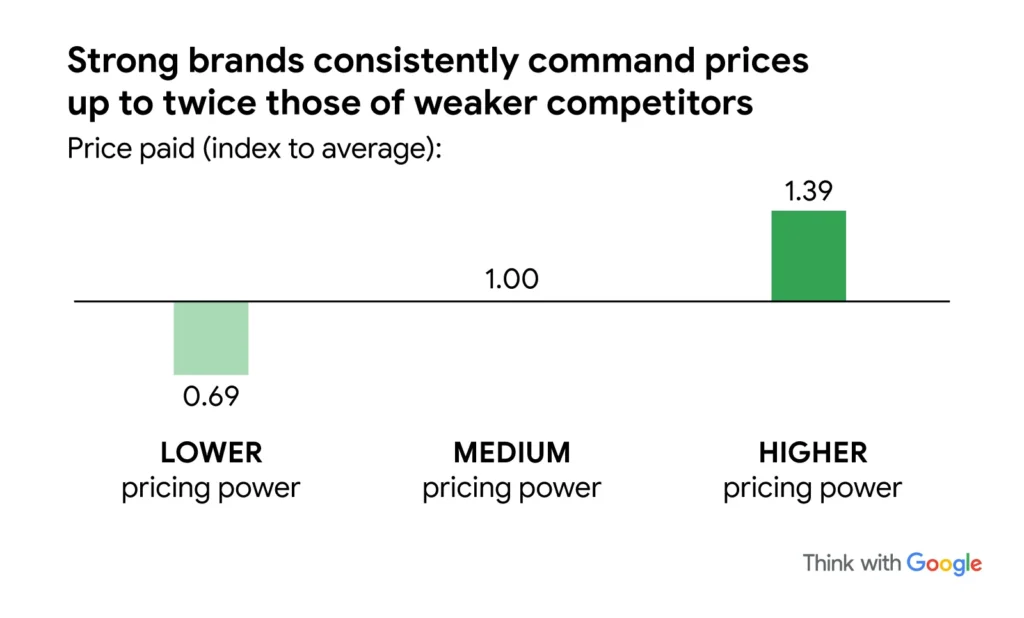
A Strong Brand as a Shield Against Inflation
When prices climb, customers get pickier about value. If a brand can’t justify a higher price tag with sharp communication, it risks losing loyalty. Marketing anchors that price as “fair” in customers’ minds—tied to quality, experience, or status.
A strong brand acts like a buffer, holding sales steady even with price hikes. Data backs this up: top brands can charge double what weaker competitors do without tanking volume.
Case Study: How Marketing Cut Price Elasticity
- Without marketing, they’d have lost 10% of volume, netting just 2% revenue growth.
- With marketing, they shaved price elasticity from -0.7 to -0.6, dropping sales by only 7%.
- Take a British skincare brand facing a 14% price bump. Instead of leaning on quick promos, they doubled down on brand-building first. The payoff?
That landed them a 7% revenue boost—76% of it thanks to marketing. McCain, another brand, slashed its price elasticity by 47% over nine years of steady brand work.
How Marketing Pumps Up Pricing Power
Investing in a brand pays off long-term. A brand with high perceived value:
- Can raise prices without major sales dips
- Relies less on discount wars
- Locks in more loyalty and repeat buys
Overdoing promos and deals, though, weakens that pricing muscle. Studies show firms shifting from promo-heavy tactics to balanced branding cut price elasticity by up to 20%.
Evaluating Marketing as an Investment, Not a Cost
Slashing marketing budgets in rough patches might feel smart, but it’s shortsighted. Research says clawing back market share costs $1.85 for every $1 saved from cuts.
A strong brand isn’t about instant cash—it’s a future-proof investment that shields a company from market storms.
Tips for Brands and Marketers in 2025:
- Measure Marketing’s Price Impact
Dig into how customers see your brand’s value. Track price elasticity, test willingness to pay, and run regular brand strength surveys. - Speak Finance’s Language
Show your finance team how marketing lifts not just sales but price and profit. Use metrics that tie it all to the bottom line. - Bet on Brand Building
Invest in your brand even if the ROI isn’t instant. Over time, it’s the best defense against price pressure, competition, and crises.
Wrap-Up
Strong marketing goes beyond discounts and quick wins. It builds value that lets brands thrive in shaky economies, raise prices, and keep customers on board. In 2025, it’s worth viewing marketing not as an expense—but as a playbook for a more profitable tomorrow.
Curious about this topic? Check out more insights in our latest blog and stay in the loop!
Zdroj: ThinkWithGoogle
Marec 2025